Hello dear readers: The Samsung Galaxy Wide Fold phone has been making waves in tech circles lately, and for good reason. After Samsung dropped S Pen support from the Galaxy Z Fold 7 to achieve a thinner profile, many users felt something valuable was missing. Now, fresh rumors suggest the stylus might be making a comeback, though not quite where you’d expect. This new development comes at an interesting time, as Apple prepares to enter the foldable market with its own iPhone Fold later in 2026.
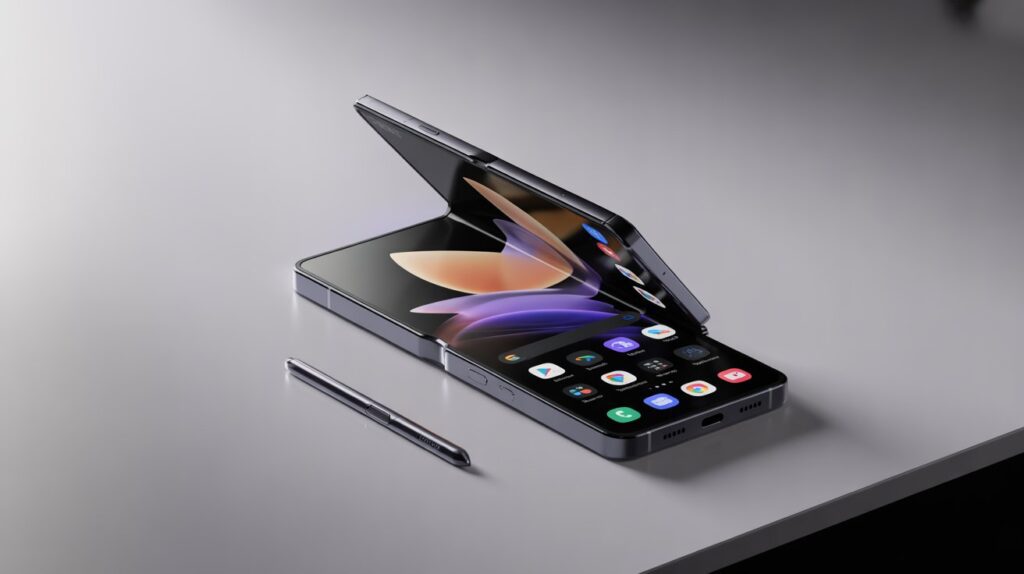
If these rumors pan out, the Samsung Galaxy Wide Fold phone could represent a significant shift in how Samsung approaches its foldable lineup. Rather than treating every foldable the same way, the company seems to be embracing specialization. Some models will prioritize being impossibly thin and pocketable, while others will focus on productivity features like stylus support. It’s a strategy that makes sense when you consider how diverse user needs have become in the smartphone market.
Why Samsung Removed S Pen Support in the First Place
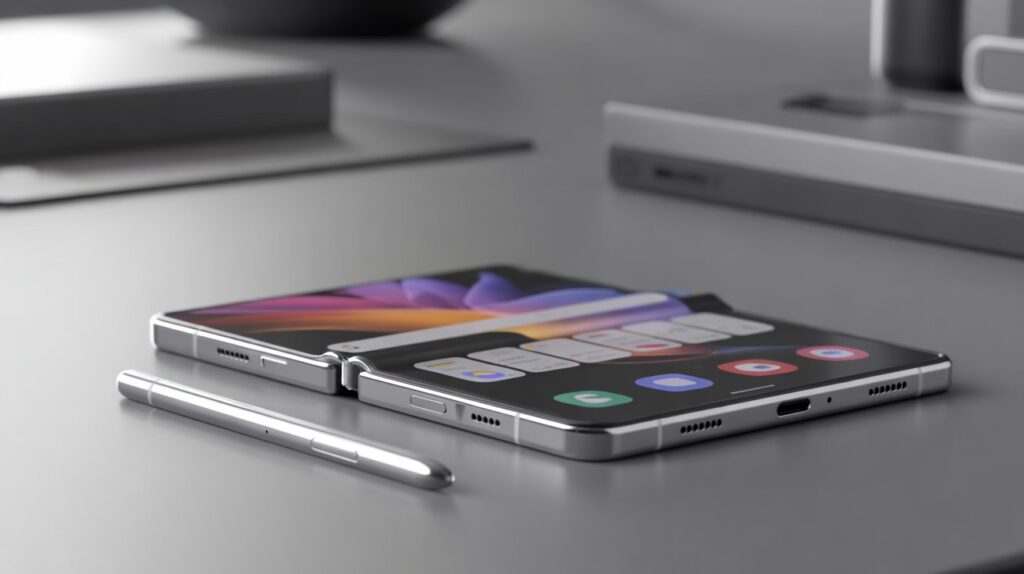
To understand why the Samsung Galaxy Wide Fold phone might bring back S Pen support, we need to look at why Samsung removed it from the Galaxy Z Fold 7. The decision wasn’t arbitrary or cost cutting related. Samsung had a clear goal to make the Fold 7 the thinnest and lightest foldable in its portfolio.
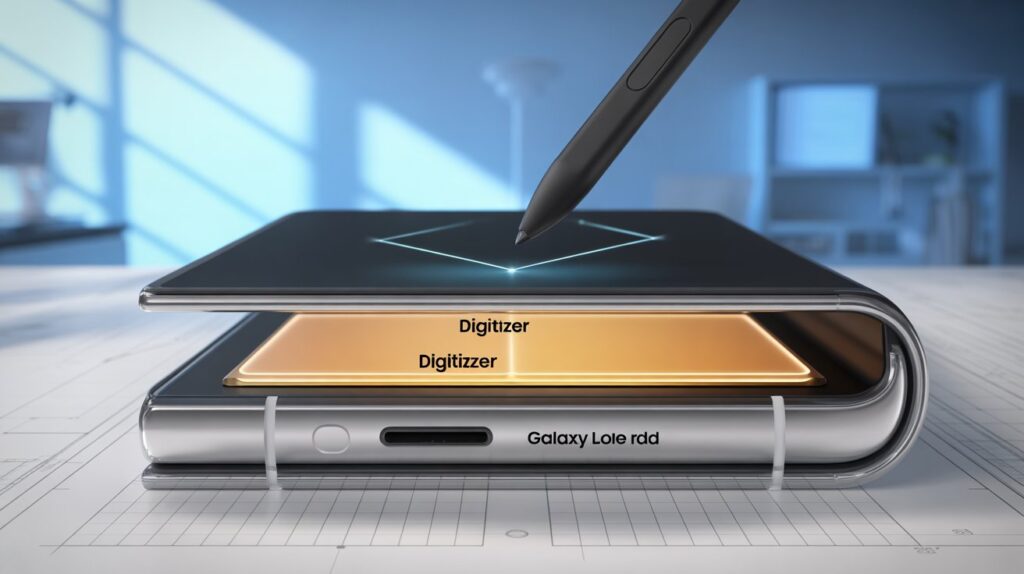
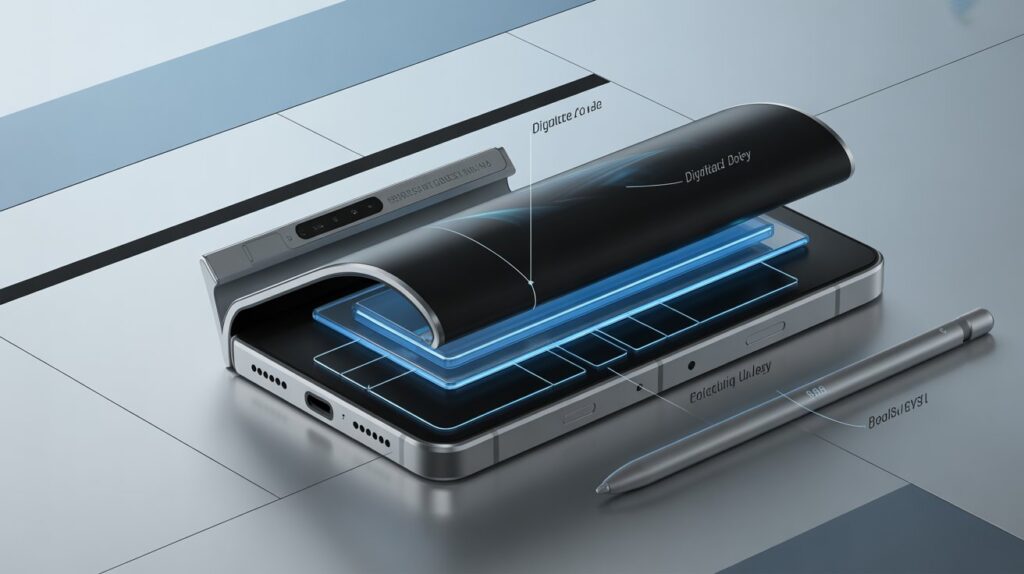
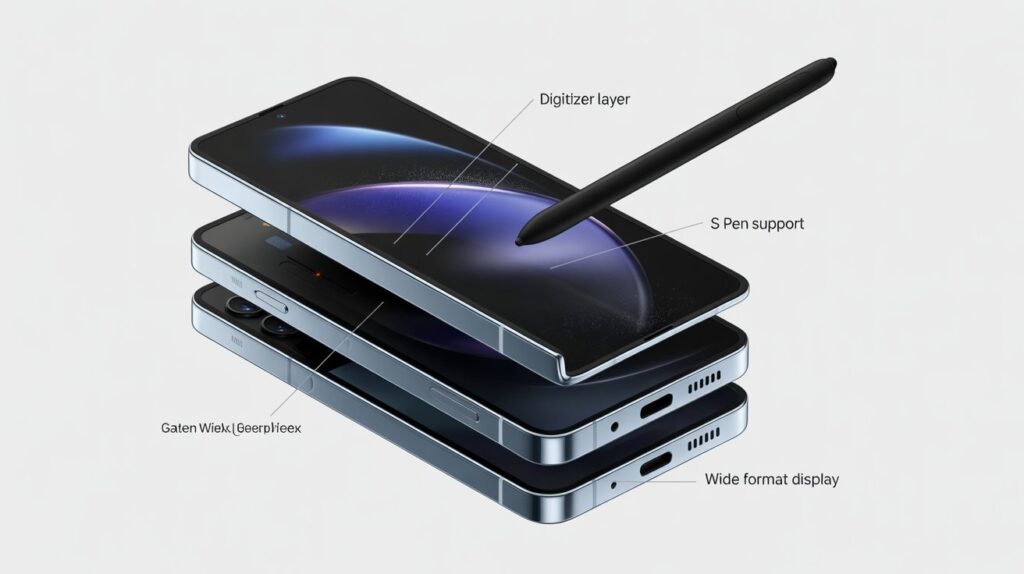
Supporting the S Pen requires a digitizer layer beneath the display. This layer recognizes stylus input and allows for precise pressure sensitivity. While it’s not enormously thick, even a few millimeters make a difference when you’re trying to create the slimmest possible device. The digitizer also adds a bit of weight, which matters when you’re already dealing with two displays, batteries, and complex hinge mechanisms.

The Galaxy Z Fold 7 achieved its svelte dimensions by removing this digitizer entirely. The result was a phone that felt notably more comfortable in the pocket and easier to hold for extended periods. Many reviewers praised this decision, noting that while S Pen support was nice to have, most users rarely took advantage of it. The stylus wasn’t even included in the box with previous Fold models. You had to buy it separately, and finding a place to store it was another challenge altogether.
The Trade Offs That Made Sense

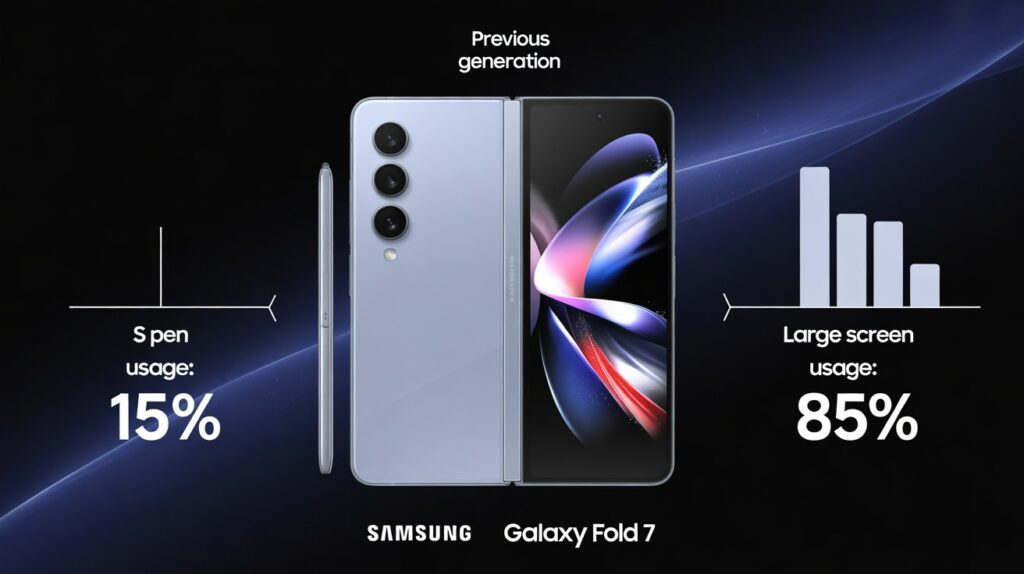
Samsung’s data probably showed that actual S Pen usage among Fold owners was lower than expected. Most people bought the Fold for the large screen experience, not necessarily for stylus input. Those who wanted serious stylus functionality were more likely to buy a Galaxy S Ultra phone or a dedicated tablet. Meanwhile, everyone had to live with a thicker, heavier device whether they used the S Pen or not.
The trade off seemed reasonable. Make the phone more pocketable and comfortable for the majority of users, even if it means losing a feature that relatively few people actively used. The Fold 7 was widely praised for how much more practical it felt in daily use compared to its predecessors. Sometimes removing features can actually improve a product if those features were creating compromises that affected everyone.
What We Know About the Samsung Galaxy Wide Fold Phone
Now let’s talk about this new device. The Samsung Galaxy Wide Fold phone appears to be Samsung’s answer to Apple’s upcoming foldable iPhone, which is rumored to have a wider, more square aspect ratio when unfolded. Current Samsung Fold devices are taller and narrower, with a 21 to 9 aspect ratio when closed and 20 to 18 when open. The new Wide Fold would adopt a 4 to 3 aspect ratio, making it noticeably more square shaped.
Why does aspect ratio matter so much? It affects everything about how you use the device. Current Fold phones work well for reading articles, scrolling social media, and watching videos in portrait mode. But they’re less ideal for tasks like editing documents, viewing spreadsheets, or working with multiple windows side by side. A 4 to 3 aspect ratio is closer to a traditional tablet, which makes these productivity tasks much more comfortable.
Screen Sizes and Physical Dimensions
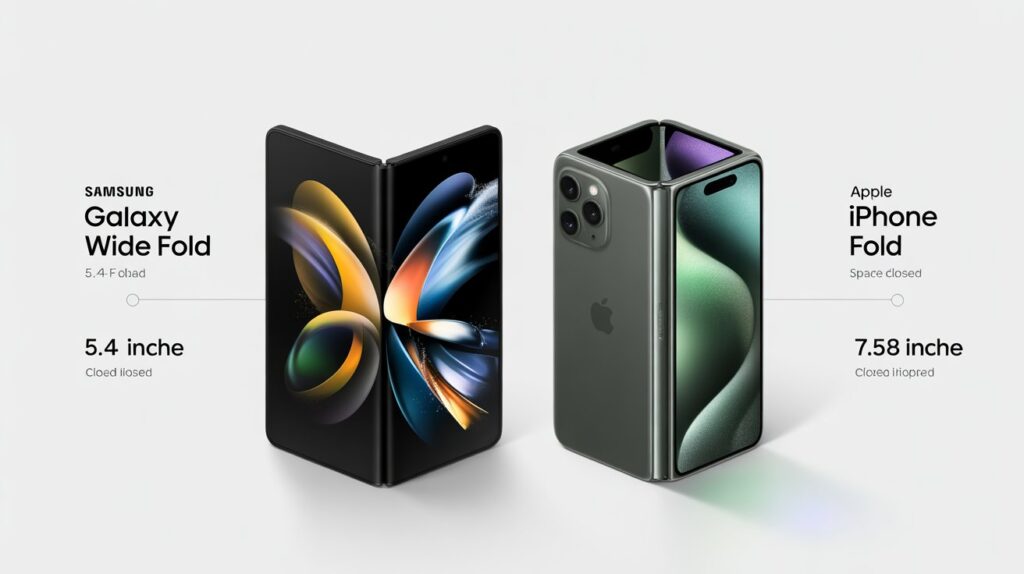
According to leaks from reliable tipster UniverseIce, the Samsung Galaxy Wide Fold phone will feature a 5.4 inch display when closed and a 7.6 inch display when fully opened. These dimensions closely mirror what’s expected for Apple’s iPhone Fold, which is rumored to have screens measuring 5.35 inches and 7.58 inches respectively. Samsung clearly knows what Apple is planning, probably because both companies work with the same display suppliers and manufacturing partners.
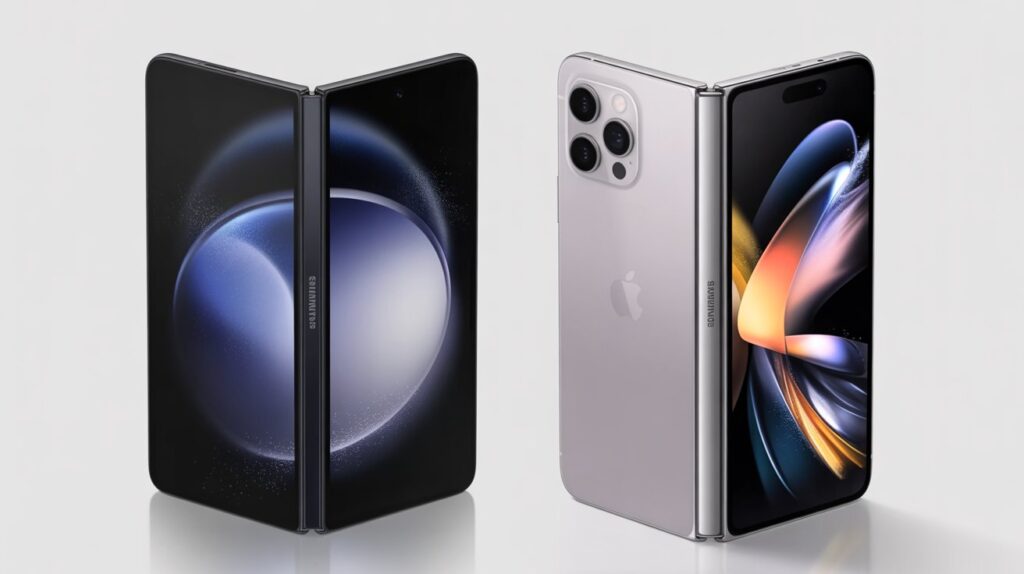
The similarity in sizing isn’t a coincidence. Samsung is developing a device that will directly compete with the iPhone Fold on its own terms. Rather than trying to convince people that a taller, narrower design is better, Samsung is essentially saying: if you want a wide foldable, we can do that too, and we can do it with features Apple won’t offer at launch.
S Pen Support Becomes a Differentiator

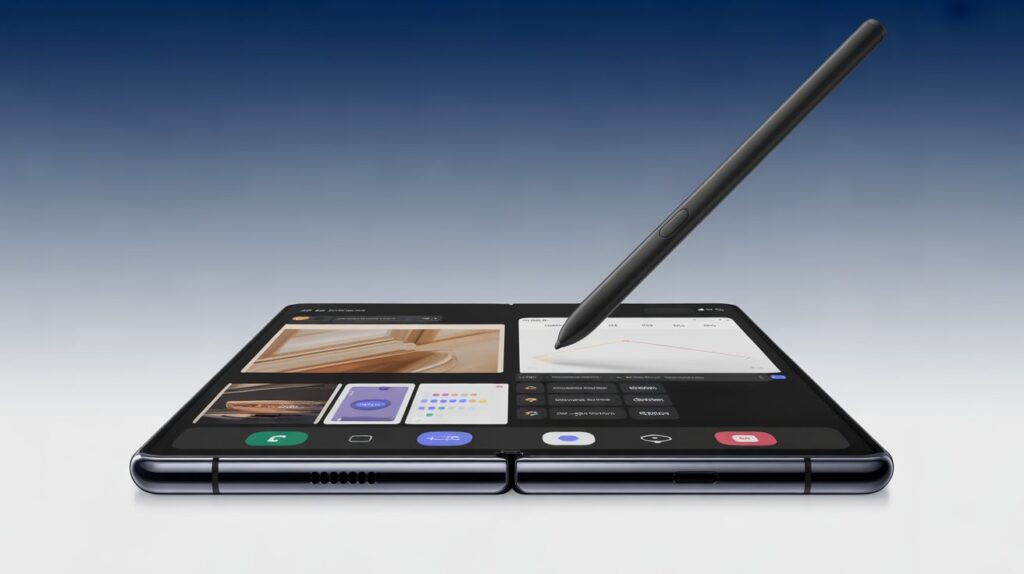
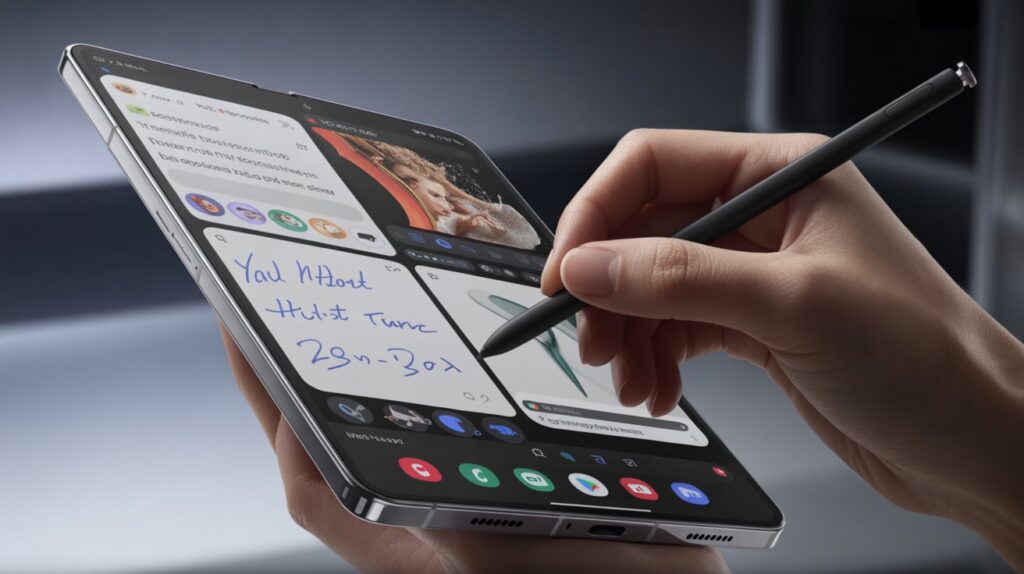
Here’s where things get really interesting for productivity focused users. The Samsung Galaxy Wide Fold phone is rumored to support the S Pen, which would give it a significant advantage over the iPhone Fold. Apple has never included stylus support in its standard iPhones. While the Apple Pencil works wonderfully with iPads, there’s no indication that Apple plans to bring that functionality to a foldable iPhone, at least not in the first generation.
Read more: Realme 16 Pro India launch – Realme 16 Pro Chipset, Battery, See Expected Specs
For anyone who needs to take notes during meetings, sketch ideas quickly, or annotate documents on the go, having S Pen support on a device with tablet sized screen real estate could be genuinely useful. It’s not just about having the feature. It’s about having it in a form factor that makes it practical to use throughout the day.
The Engineering Challenges of Bringing It Back
Reintroducing S Pen support isn’t as simple as flipping a switch. Remember that digitizer layer Samsung removed from the Fold 7? It needs to come back, which means the Samsung Galaxy Wide Fold phone will likely be thicker than the ultra slim Fold 7. Samsung seems willing to accept this trade off for the Wide Fold because the target audience is different. People choosing the wider format are probably prioritizing productivity over pocketability anyway.
There’s also talk of Samsung exploring new technical solutions. Some reports mention a possible chip based system that could enable stylus input without requiring the traditional digitizer layer. If Samsung pulls this off, it would be a significant technological achievement. However, given the timeline for a fall 2026 launch, it seems more likely they’ll stick with proven digitizer technology for the first generation.
How This Fits Into Samsung’s Broader Strategy
Samsung isn’t putting all its eggs in one basket. The company is reportedly planning to launch multiple book style foldable devices in 2026. You’ll have the standard Galaxy Z Fold 8, which will continue the tradition of being thin, light, and stylus free. Then there’s the Samsung Galaxy Wide Fold phone with its wider aspect ratio and S Pen support. And of course, there will be at least one Galaxy Z Flip device for people who prefer the clamshell form factor.

This diversification makes sense when you consider how the smartphone market has evolved. There’s no longer one ideal phone that suits everyone. Different people have genuinely different needs. Some want the thinnest possible device. Others need stylus input for work. Some prefer compact devices. Others want maximum screen real estate. By offering multiple form factors, Samsung can capture different segments of the market rather than trying to make everyone happy with one compromise heavy design.
The Apple Factor Cannot Be Ignored
Let’s be honest about what’s driving this development. If Apple weren’t preparing to launch its own foldable iPhone, Samsung probably wouldn’t be developing the Samsung Galaxy Wide Fold phone right now. The current Fold formula has been working well enough. But Apple’s entry into the foldable market changes everything. When Apple launches a product category, it often reshapes consumer expectations and drives mainstream adoption.
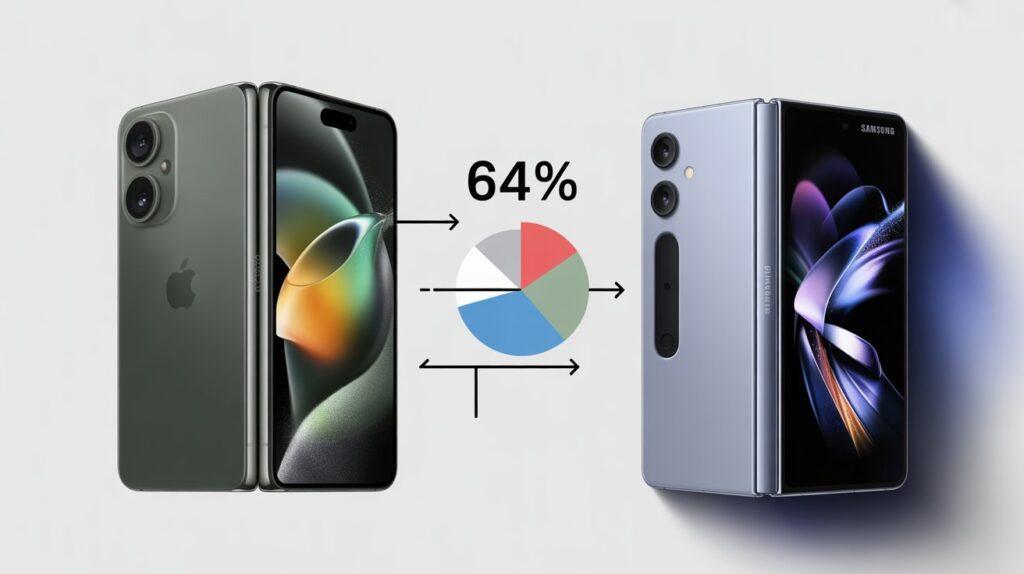
Samsung currently dominates the foldable market with roughly 64 percent global share. That dominance exists partly because they were first to market and partly because there hasn’t been serious competition from premium brands. Apple’s arrival threatens to change the conversation entirely. Suddenly, millions of loyal iPhone users who never considered a foldable will be looking at Apple’s offering. Samsung needs to ensure it has compelling alternatives ready.
The timing is deliberate. Both companies are apparently targeting fall 2026 for their launches, setting up what could be the most significant foldable showdown we’ve seen. Samsung isn’t just reacting to Apple. They’re preparing to meet the challenge head on with multiple weapons in their arsenal.
Expected Launch Timeline and Availability

If the reports are accurate, the Samsung Galaxy Wide Fold phone could launch in fall 2026, likely around September or October. This timeline would put it right around the same window when Apple is expected to debut the iPhone Fold. Samsung will probably want to launch slightly before Apple to establish their offering in the market and shape the conversation.

The device would join the Galaxy Z Fold 8 and Galaxy Z Flip 8 in Samsung’s 2026 foldable lineup, creating a trio of distinct form factors. This gives Samsung flexibility in their marketing. They can position the Fold 8 as the everyday foldable for people who want something practical, the Flip as the compact option, and the Wide Fold as the productivity powerhouse with stylus support.
Initial availability will likely focus on major markets where foldables have gained traction, including South Korea, the United States, Europe, and key Asian markets. Samsung might stagger the rollout to manage supply and gather feedback before expanding to additional regions.
What About the Price Tag
Here’s the part that might make you wince a bit. The Samsung Galaxy Wide Fold phone is rumored to carry a price tag around 2,400 dollars in the United States. That’s roughly 2,15,000 rupees if you convert it directly, though Indian pricing usually works out a bit differently due to taxes and duties.
To put that in perspective, the current Galaxy Z Fold 7 starts at around 1,900 dollars. So we’re looking at a 500 dollar premium for the wider form factor and S Pen support. That’s a significant jump, but it might be justified if the device delivers on its productivity promises. For professionals who use their phone as a serious work tool, having a device that can effectively replace a tablet might be worth the extra cost.
Will People Actually Pay That Much
That’s the big question. Samsung is betting that there’s a market segment willing to pay premium prices for premium capabilities. Business users, creative professionals, and tech enthusiasts might see the value in having a device that truly bridges the gap between phone and tablet. The inclusion of S Pen support could be the deciding factor that justifies the high price for these buyers.
However, Samsung will need to nail the execution. At that price point, the device cannot feel like a compromise. The build quality needs to be impeccable, the software needs to be polished, and the S Pen experience needs to be genuinely useful rather than feeling tacked on. Any rough edges will be magnified at this price level.
Software Optimization Will Be Critical

Having S Pen support is one thing. Making it actually useful is another. Samsung will need to ensure that their software takes full advantage of the wider screen and stylus input. This means optimized multitasking, proper palm rejection, and apps that make sense to use with a stylus.
Samsung has been working on its foldable software for several years now, and it shows. Features like Flex Mode, app continuity, and split screen multitasking have gotten progressively better. The Samsung Galaxy Wide Fold phone will need to build on this foundation while adding stylus specific features.
Think about use cases like annotating PDFs during business calls, sketching wireframes during creative meetings, or taking handwritten notes during lectures. These scenarios require software that feels natural and responsive. The S Pen cannot feel like an afterthought. It needs to be integrated into the core experience in ways that make users reach for it regularly.
What This Means for the Foldable Market

The development of devices like the Samsung Galaxy Wide Fold phone signals that the foldable market is maturing. We’re moving past the early adopter phase where any foldable was novel simply for being foldable. Now we’re entering a phase where form factors need to justify themselves based on real use cases and genuine advantages.
Specialization is a healthy sign. It suggests manufacturers are listening to feedback and recognizing that different users have different priorities. Rather than trying to make one foldable that does everything adequately, companies are creating devices optimized for specific use cases. Some foldables will prioritize portability, others will focus on productivity, and some might emphasize durability or battery life.
This diversification should benefit consumers in the long run. More options mean better chances of finding a device that truly fits your needs rather than accepting compromises. Of course, it also means the purchasing decision becomes more complex. You’ll need to think carefully about how you actually use your phone rather than just buying whatever’s newest.
The Bigger Picture Worth Considering
Looking beyond just the Samsung Galaxy Wide Fold phone, this situation tells us something interesting about the state of innovation in the smartphone industry. Companies are trying to find new ways to differentiate in a market where most phones have become quite similar. Foldables offer genuine novelty and practical advantages, but even within foldables, differentiation is becoming necessary.
The return of S Pen support, the variation in aspect ratios, the different approaches to thickness and weight – these are all attempts to create distinct product personalities. Some will succeed, others will fail, but the experimentation is valuable. We learn what works and what doesn’t through real world usage, not just focus groups and surveys.
Samsung is in a unique position where they can afford to experiment with multiple form factors because they have the manufacturing capability, the supply chain relationships, and the market presence to pull it off. Smaller companies would struggle to maintain such a diverse foldable lineup. This is Samsung using their scale as an advantage, and it might be necessary to compete effectively against Apple’s considerable resources and loyal customer base.
Wrapping Up the S Pen Comeback Story
The potential return of S Pen support through the Samsung Galaxy Wide Fold phone represents an interesting pivot for Samsung. Rather than treating stylus support as an all or nothing proposition, they’re creating a dedicated device for users who value that functionality. This approach lets them maintain the thin and light Fold 8 for mainstream users while offering something more specialized for productivity focused buyers.
Whether this strategy succeeds depends on execution and market reception. Can Samsung deliver a device that justifies its premium price? Will users respond positively to the wider aspect ratio? Does the combination of S Pen support and tablet like dimensions create enough value to overcome the higher cost and potentially bulkier form factor? We’ll find out when the device launches, presumably in fall 2026. Until then, the rumors and leaks will keep coming, gradually filling in more details about what could be one of the more interesting foldable launches we’ve seen. The competition with Apple’s iPhone Fold will make things even more fascinating to watch unfold.