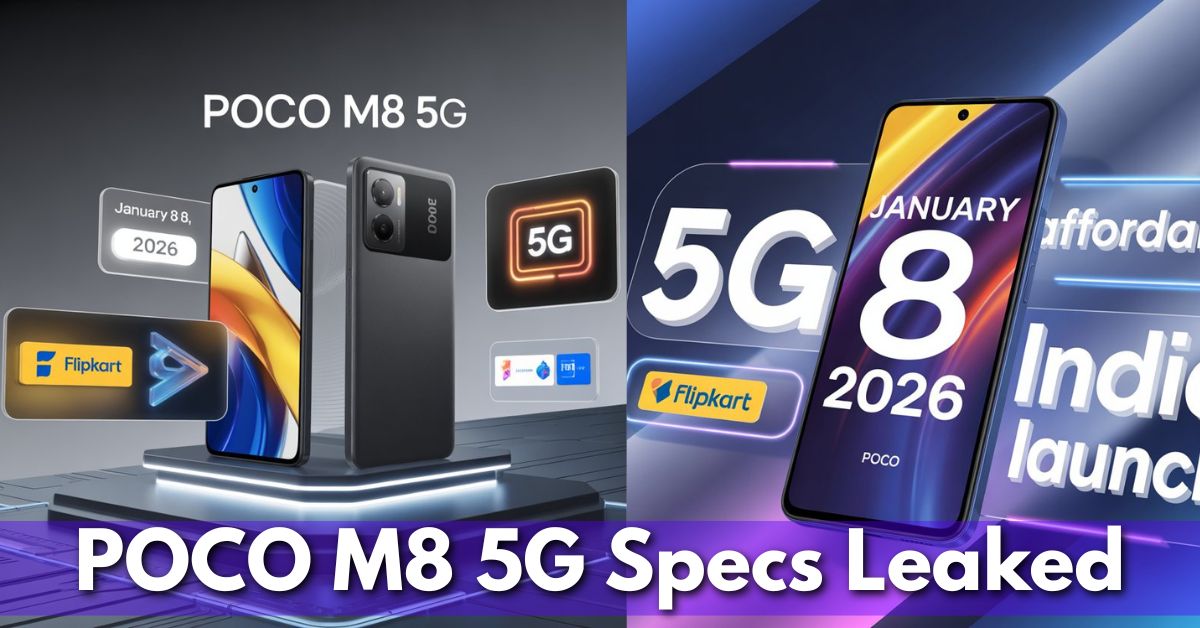
Hello dear smartphone lovers: The POCO M8 5G is just days away from its official India debut, and the leaks are coming in fast. POCO has confirmed January 8, 2026 as the launch date, with sales kicking off on Flipkart shortly after. If you’ve been waiting for an affordable 5G phone that doesn’t feel like a compromise, this might be worth your attention. The teasers so far show a slim design, decent specs on paper, and what looks like competitive pricing for the segment. Let’s walk through everything we know based on official teasers and reliable leaks that have surfaced over the past few days.
What makes the POCO M8 5G interesting is how POCO seems to be positioning it. The company is marketing it as the slimmest phone in its lineup, measuring just 7.35mm thick while weighing only 178 grams. Those are legitimately impressive numbers if they translate into a phone that feels comfortable to hold and use daily. POCO hasn’t revealed pricing yet, but based on how the Redmi Note 15 5G is priced globally and where the previous POCO M7 landed in India, we’re probably looking at something in the Rs. 12,000 to Rs. 18,000 range, with the base variant likely closer to Rs. 15,000.
Launch Date and Where You Can Buy It
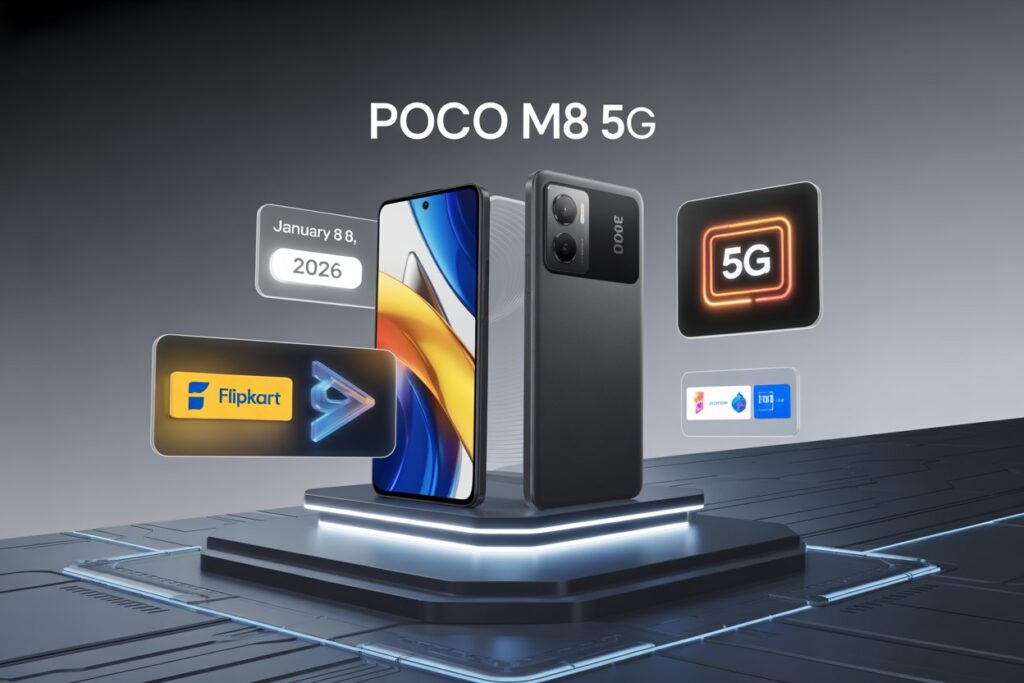
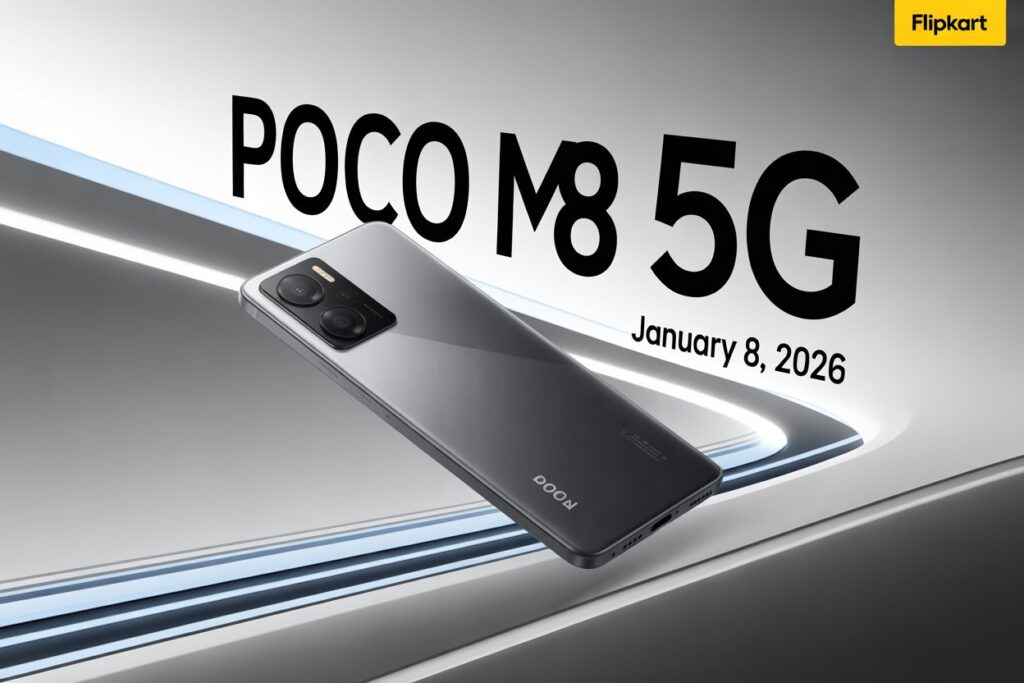
POCO has officially confirmed the POCO M8 5G will launch on January 8, 2026 at 12 PM IST. The phone will be exclusive to Flipkart, where a microsite is already live showing off some design elements and building hype. Sales should begin on Flipkart right after the launch event, possibly on the same day or within 24 hours based on how POCO typically operates.
The timing is interesting because it comes just two days after the Redmi Note 15 5G launches in India on January 6. That’s not a coincidence. The POCO M8 5G is widely believed to be a rebranded version of the Redmi Note 15 5G with some positioning tweaks and possibly different configurations. POCO and Redmi are both under the Xiaomi umbrella, so this kind of badge engineering is standard practice for them.
What About the POCO M8 Pro

While the standard M8 5G is confirmed for January 8, there are also leaks about a POCO M8 Pro 5G. This higher end variant might not launch on the same day. Some tipsters suggest it could arrive in February, giving POCO time to establish the standard model first before bringing in the Pro version with upgraded specs and a higher price tag. This staggered launch approach makes sense from a marketing perspective, as it keeps the POCO M8 series in the news for a longer period.
Display Specs Point to a Solid Viewing Experience
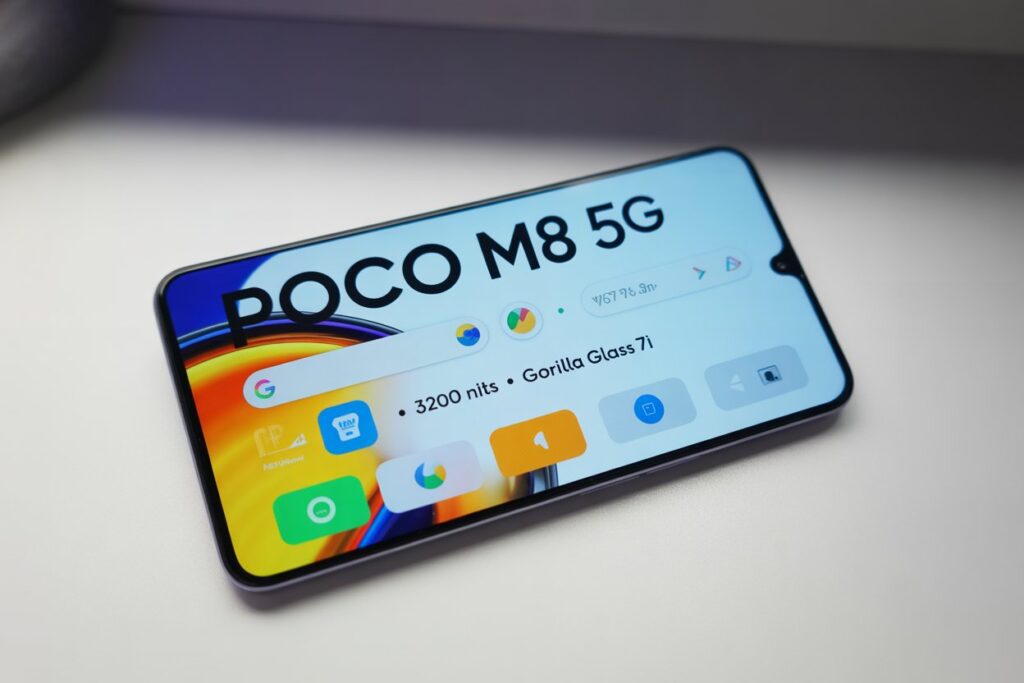
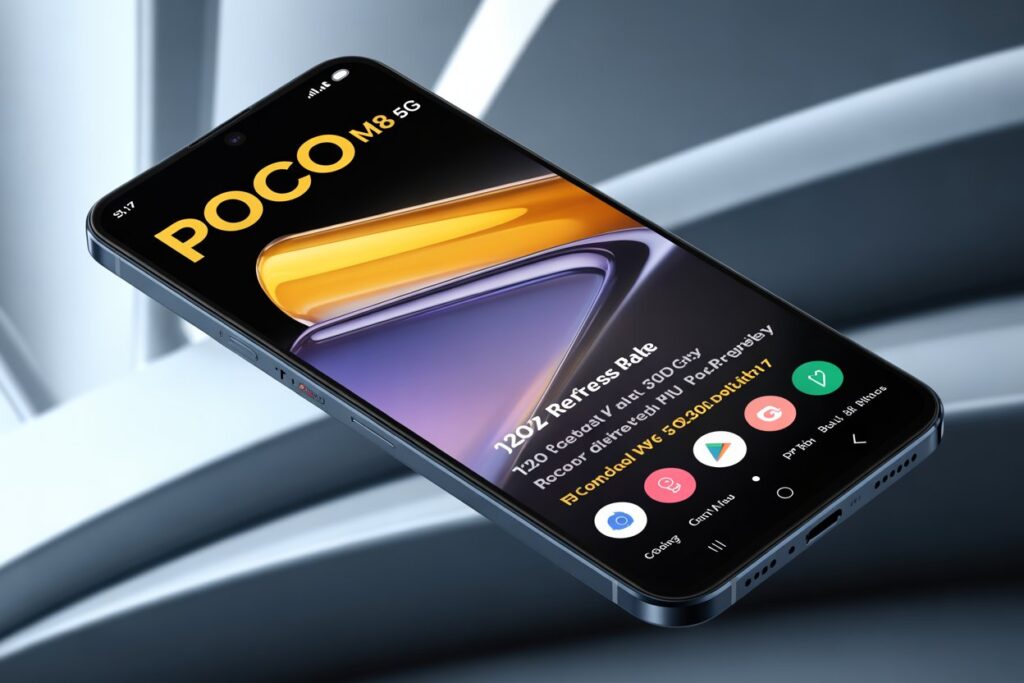
The POCO M8 5G is expected to feature a 6.77 inch AMOLED display with Full HD Plus resolution, specifically 2392 x 1080 pixels according to most leaks. The refresh rate tops out at 120Hz, which has become pretty much standard even in budget phones at this point. What’s more interesting is the peak brightness claim of 3200 nits, though that’s likely a local peak brightness figure rather than sustained full screen brightness. Still, if the display can hit even half that in real world use, it should be perfectly usable outdoors.
The screen is also rumored to have Corning Gorilla Glass 7i protection. That’s a relatively recent version of Gorilla Glass that offers improved drop and scratch resistance compared to older generations. The curved AMOLED panel should make the phone feel more premium than its price tag suggests, assuming the curve isn’t too aggressive. Some people love curved displays for the immersive feel, while others find them prone to accidental touches, so your mileage may vary.
How the Display Size Affects Daily Use
A 6.77 inch screen is large by most standards. It’s great for consuming content, whether that’s watching videos, scrolling through social media, or reading articles. Gaming also benefits from the extra screen real estate. However, the phone becomes harder to use with one hand, and it might feel cumbersome if you have smaller hands or prefer more compact devices. The thin bezels and relatively light 178 gram weight should help mitigate the size somewhat, but it’s still a big phone that won’t disappear in your pocket.
Camera System Aims Higher Than Expected

The camera setup on the POCO M8 5G is where things get a bit more interesting than your typical budget phone. The main sensor is tipped to be 50MP with optical image stabilization. Having OIS at this price point isn’t common. It helps with low light photography by allowing longer exposure times without blur, and it also improves video stabilization significantly.
The secondary rear camera is listed as a 2MP depth sensor in most leaks. Let’s be honest, a 2MP depth sensor in 2026 feels like spec sheet padding more than anything useful. These low resolution depth sensors don’t add much real value to portrait mode shots since modern phone software can do depth estimation well enough from the main camera alone. It’s there to say the phone has a dual camera setup, but don’t expect miracles from it.
Selfie Camera Gets Decent Resolution
For selfies and video calls, the POCO M8 5G is expected to pack a 20MP front camera. That’s a solid resolution that should handle most use cases comfortably. The exact sensor quality and how well POCO’s processing algorithms handle skin tones and dynamic range remain to be seen, but on paper, 20MP gives the phone enough raw resolution to deliver decent selfies even when you crop or zoom in slightly.
The camera module design is distinctive, with a centrally placed squircle shape housing the cameras and LED flash. Some leaked images show a dual tone rear panel combining matte and vegan leather finishes, which could help with grip and give the phone a more premium feel than all plastic backs.
Processor and Performance Expectations

Under the hood, the POCO M8 5G is expected to run on Qualcomm’s Snapdragon 6 Gen 3 processor. This chip was announced relatively recently and represents Qualcomm’s latest effort in the mid range segment. It’s built on a modern manufacturing process, though not quite as advanced as what flagship chips use. For daily tasks like browsing, social media, messaging, and even moderate gaming, the Snapdragon 6 Gen 3 should perform adequately.
Don’t expect blazing fast performance that rivals flagship phones. You’re not getting a Snapdragon 8 series chip here. What you are getting is a processor that should handle PUBG Mobile at medium settings, run multiple apps without constant reloading, and generally provide a smooth enough experience that you won’t feel frustrated during normal use. Heavy multitasking and demanding games might show the chip’s limitations, but for most users, it should be fine.
RAM and Storage Configurations
Leaks suggest the POCO M8 5G will come with 8GB of RAM and storage options going up to 256GB, possibly even 512GB in some markets. Eight gigs of RAM is comfortable for multitasking and keeping apps loaded in memory. You shouldn’t experience too much app reloading when switching between apps, which is one of the more annoying aspects of phones with insufficient RAM.
The storage situation is interesting because 512GB is quite generous for a phone in this price bracket. Most competitors offer 128GB or 256GB as their maximum option. If POCO actually brings 512GB variants to India, it could be a genuine differentiator for people who shoot a lot of photos and videos or download many large apps and games. The storage type is expected to be UFS 3.1 or possibly UFS 4.0, both of which are fast enough that you won’t notice storage speed being a bottleneck in daily use.
Battery Life Should Be a Strong Point
The POCO M8 5G is rumored to pack a 5,520mAh battery. That’s a healthy capacity that should easily get most users through a full day of moderate to heavy use. With the relatively efficient Snapdragon 6 Gen 3 processor and AMOLED display that can turn off individual pixels to save power, battery life could be one of the phone’s stronger selling points.
Charging speeds are pegged at 45W wired fast charging. That’s quick enough to top up the battery during a lunch break or while you’re getting ready in the morning. From empty to full, 45W charging should take somewhere around 60 to 70 minutes for a battery this size. Some leaks also mention 18W reverse charging capability, which would let you use the phone as a power bank to charge other devices like wireless earbuds or a smartwatch. That’s a nice bonus feature if it makes it to the final product.
Real World Battery Expectations
With a 5,520mAh battery, you’re probably looking at 6 to 8 hours of screen on time with mixed usage. If you’re a light user who mainly sticks to messaging, calls, and occasional social media, you might even stretch it to two days between charges. Heavy users who game, stream video, and constantly use their phones will drain it in a day, but even they should get comfortable full day battery life without anxiety about running out of juice before bedtime.
Battery optimization features in Android and POCO’s HyperOS software should help extend battery life further by limiting background activity and managing how apps consume power when you’re not actively using them.
Software Will Be HyperOS 2 Based on Android 15
The POCO M8 5G is expected to ship with HyperOS 2.0 based on Android 15. For those unfamiliar, HyperOS is Xiaomi’s replacement for MIUI, and it’s meant to work across Xiaomi’s entire ecosystem of devices including phones, tablets, and smart home products. It’s still relatively new, so how polished and bug free it feels depends partly on how quickly Xiaomi has been refining it.
HyperOS tends to include more features and customization options than stock Android, but it also comes with more pre installed apps and occasional ads in system apps. How you feel about that trade off depends on personal preference. Some people appreciate the extra features and ability to customize almost everything. Others prefer cleaner, more minimal software experiences.
Update Commitments Matter
What we don’t know yet is how long POCO will support the POCO M8 5G with software updates. The company should clarify this at launch. Ideally, you’d want at least two years of major Android updates and three to four years of security patches for a phone in this segment. Anything less starts feeling like planned obsolescence, especially when you’re paying Rs. 15,000 or more for a device.
Build Quality and Design Elements
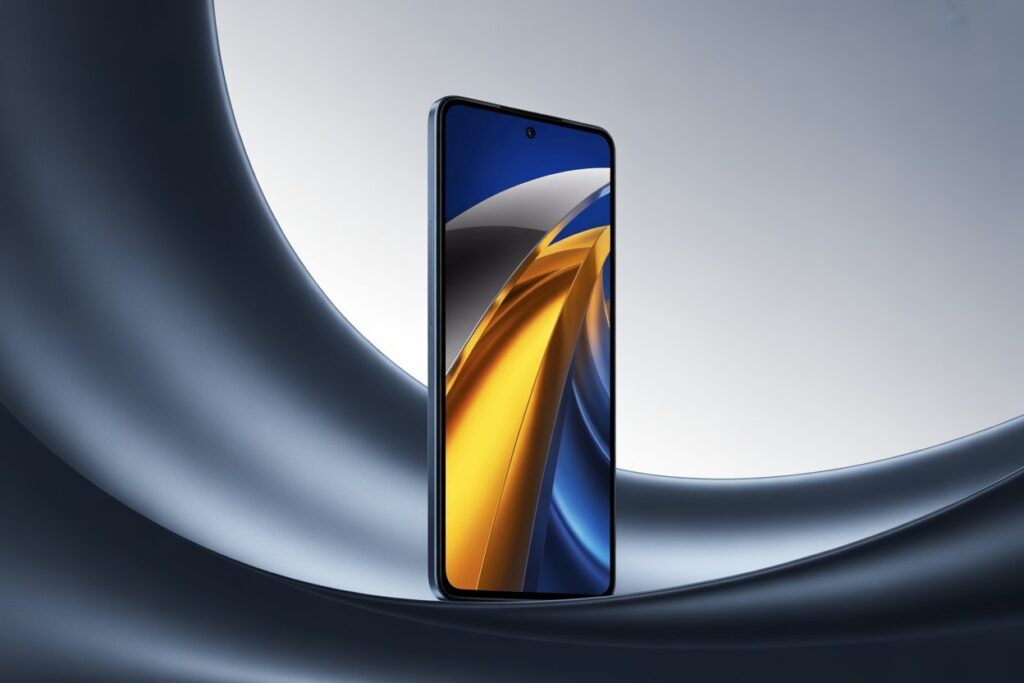
POCO has been teasing the design quite heavily. The phone measures 7.35mm thick and weighs 178 grams, making it one of the slimmer and lighter options in the segment. The rear panel features a dual tone design combining matte and vegan leather finishes. Vegan leather provides better grip than glass or plastic and tends to show fewer fingerprints, which are both practical advantages.
The centrally placed camera module houses the cameras and flash in a squircle shape. It’s a distinctive look that immediately identifies the phone as a POCO device. Color options are expected to include black, light blue, and possibly a silver black dual tone variant. The vegan leather appears to be limited to certain colors, probably the black and dual tone options.
Durability Features
The POCO M8 5G is rumored to carry IP65 rating for dust and splash resistance. That’s not as comprehensive as IP68, which allows for water submersion, but IP65 is still useful protection against everyday scenarios like getting caught in rain or accidental spills. It means the phone has some level of protection, which is more than you typically get in budget phones, though you still shouldn’t deliberately expose it to water.
The Gorilla Glass 7i protection on the display should help it survive minor drops and resist scratches from keys or coins in your pocket. No screen protection is foolproof, so using a screen protector is still a good idea if you want to keep the display pristine over time.
How It Compares to Direct Competitors
At the expected price point around Rs. 15,000 for the base variant, the POCO M8 5G will face competition from several established players. The Realme Narzo series, Samsung’s M series, Motorola’s G series, and even other Xiaomi sub brands like Redmi all have phones competing in this space.
What sets the POCO M8 5G apart, at least on paper, is the combination of a slim design, large battery, OIS on the main camera, and potentially that 512GB storage option if it comes to India. Most competitors at this price either have thick bodies, smaller batteries, or lack OIS on their cameras. Very few offer storage beyond 256GB.
The Value Proposition
Whether the POCO M8 5G represents good value depends on the final pricing and what launch offers POCO bundles with it. If the base 8GB plus 256GB variant lands at Rs. 14,999 to Rs. 15,999 with some bank discounts or exchange offers sweetening the deal, it could be quite competitive. If POCO prices it higher or the launch offers are weak, it might struggle against established competitors that have proven track records and loyal customer bases.
The inclusion of features like OIS, a large battery, and that slim design do give POCO some differentiation. The question is whether those advantages are enough to convince buyers to choose this over something from Realme, Samsung, or Motorola that might come with better software support or more extensive service networks.
What We Still Don’t Know
Despite all the leaks and teasers, there are still gaps in what we know about the POCO M8 5G. Official pricing hasn’t been revealed, though we can make educated guesses. The exact software experience and how polished HyperOS 2.0 feels on this device won’t be clear until reviewers get their hands on it. Camera performance in real world conditions rather than just on spec sheets is another unknown. And the availability of that 512GB storage variant in India is still unconfirmed.
Launch offers and bundled deals will also be crucial to understanding the phone’s value. POCO might offer discounts for HDFC or SBI cardholders, exchange bonuses for trading in old phones, or bundle deals with accessories like earbuds or power banks. These offers can effectively reduce the price by several thousand rupees, making a big difference in how competitive the phone feels.
Waiting for Reviews Makes Sense
If you’re seriously considering the POCO M8 5G, waiting a week or two after launch to see comprehensive reviews is probably smart. Early adopters will discover any issues with the phone that don’t show up in controlled testing or spec sheets. Real world camera samples, battery life reports, and software bug discoveries all come from people actually using the device daily. Unless you need a new phone immediately, a bit of patience could save you from potential buyer’s remorse.
The Bigger Picture on Budget 5G Phones
The POCO M8 5G launch is part of a broader trend in the Indian smartphone market. 5G phones are becoming more affordable, and brands are increasingly packing features that used to be reserved for mid range or flagship devices into budget offerings. OIS on cameras, high refresh rate AMOLED displays, fast charging, and large batteries are all filtering down to lower price points.
This is generally good for consumers. The days of budget phones being compromises you reluctantly accept are fading. You can now get genuinely capable devices at reasonable prices. The trade offs still exist, of course. You’re not getting flagship processors, the best camera systems, or the longest software support. But for many people, the features available in phones like the POCO M8 5G are more than adequate for their daily needs.
Whether brands can maintain profitability while offering so much at these prices is another question. Razor thin margins and high competition mean companies need to move volume to make money. That’s why you see aggressive marketing, constant launches, and heavy reliance on online exclusive models sold through platforms like Flipkart that can handle the logistics efficiently.