
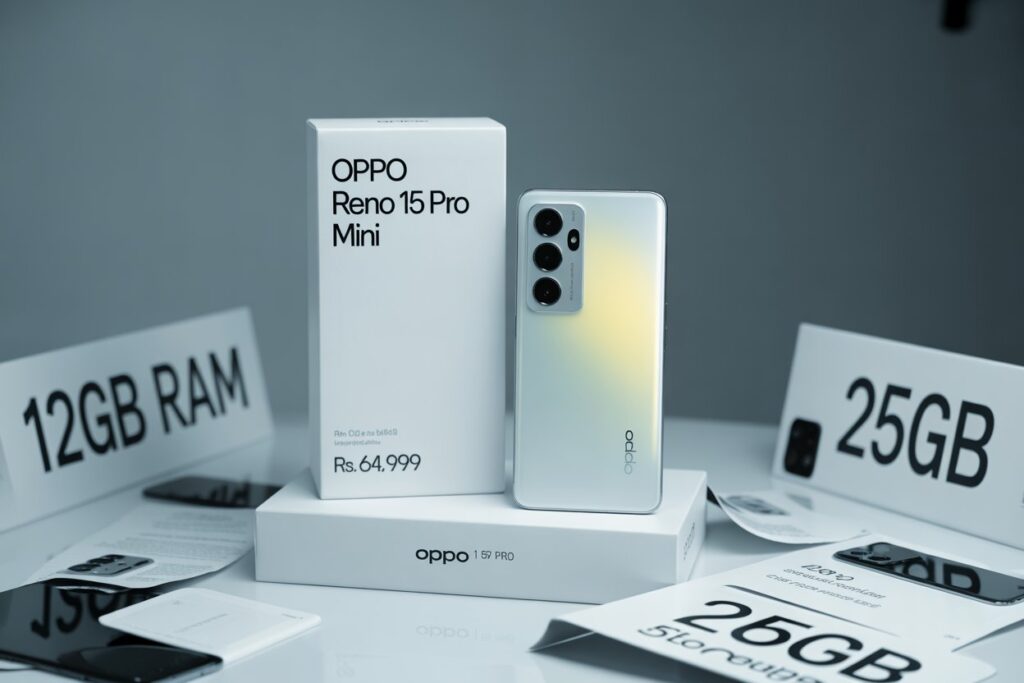
Hello my dear smartphone lovers: The Oppo Reno 15 Pro Mini has been making some noise lately, and not just because it’s another new phone launching in India. The retail box price has leaked online, giving us a pretty clear idea of where Oppo plans to position this device. According to tipster Abhishek Yadav, the box MRP sits at Rs. 64,999 for the 12GB RAM and 256GB storage variant. That’s the printed number you’d see on the packaging if you walked into a store. But here’s the thing about box prices in India: they’re almost always higher than what you’ll actually pay.
The expected street price for the Oppo Reno 15 Pro Mini is closer to Rs. 59,999 once you factor in the usual launch offers and bank discounts. That’s still a noticeable jump compared to last year’s Reno 14 Pro, which started at Rs. 49,999 for the same RAM and storage configuration. Oppo is clearly positioning this compact phone in a more premium segment, and whether that works depends on what they’re offering for the extra money. With a confirmed launch date of January 8, 2026, and first sales potentially starting January 12, we don’t have long to wait to see if the pricing makes sense against the competition.
What the Leaked Price Actually Means for Buyers

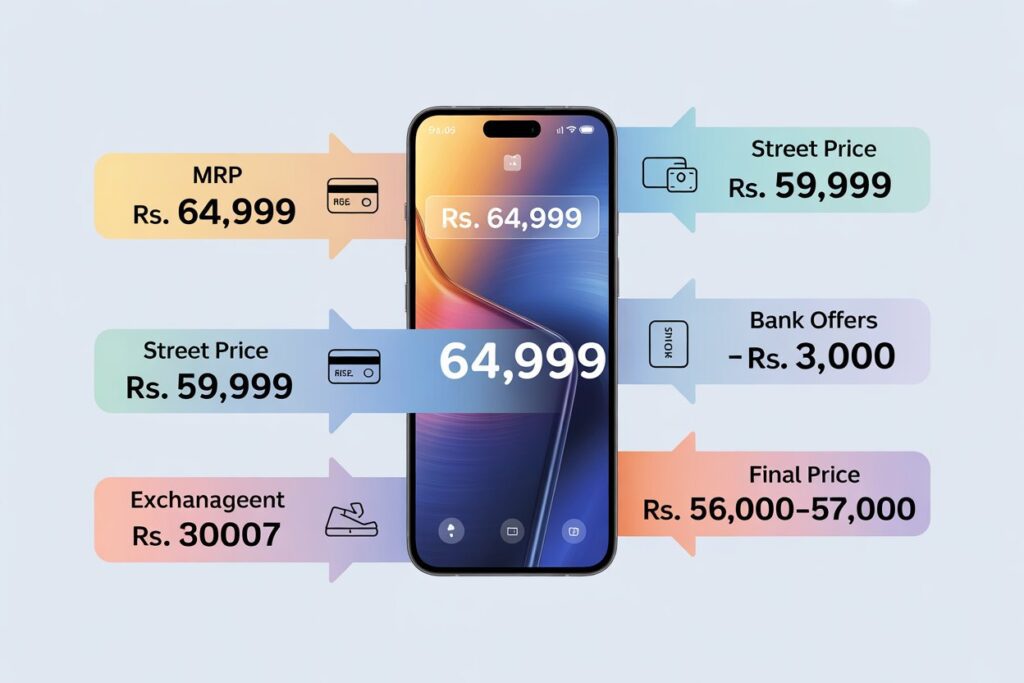
Let’s talk numbers for a moment. A retail box price of Rs. 64,999 translating to an actual selling price around Rs. 59,999 follows the typical pattern we see with smartphone launches in India. Manufacturers print a higher MRP on boxes, and the gap between that and the street price gives them room to offer “discounts” that make buyers feel they’re getting a deal.
For the Oppo Reno 15 Pro Mini, this means you’re probably looking at Rs. 59,999 as the starting point. Bank offers could shave off another Rs. 2,000 to Rs. 3,000 if you use specific credit or debit cards during the launch period. Exchange programs might sweeten the deal further if you have an old phone lying around. The effective price you’d pay could potentially drop to around Rs. 56,000 to Rs. 57,000 if you stack all available offers.
How Does This Compare to Last Year
The price jump from the Reno 14 Pro to the Reno 15 Pro Mini is roughly Rs. 10,000. That’s substantial, especially in a market segment where even a few thousand rupees can swing buying decisions. Oppo will need to justify that increase with meaningful upgrades in specs, features, or build quality. Simply slapping a “Mini” tag on a phone and adding a few thousand to the price won’t fly with Indian consumers who tend to be quite price conscious even when shopping in the premium segment.

The timing of this pricing also matters. We’re entering 2026 with several strong competitors already established in the Rs. 55,000 to Rs. 65,000 bracket. OnePlus, Vivo, Samsung, and even Apple with its iPhone SE variants are all fighting for attention in this space. The Oppo Reno 15 Pro Mini needs to offer something distinct to carve out its niche.
Expected Launch Date and Availability Details
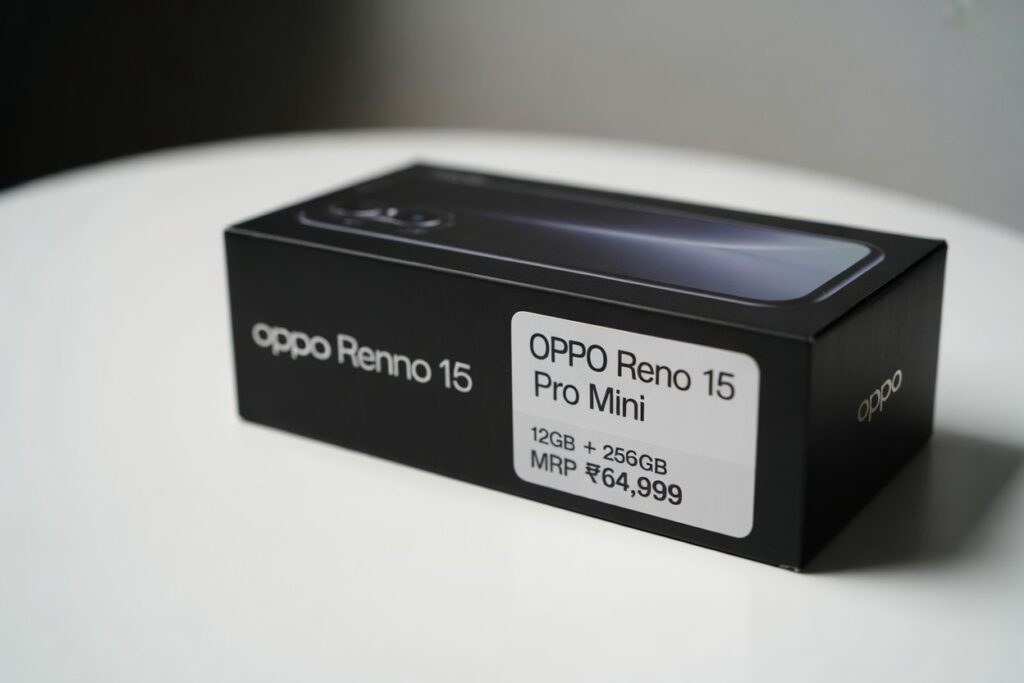
Oppo has officially confirmed that the Reno 15 series will debut in India on January 8, 2026. The lineup includes three models this time: the standard Reno 15, the Reno 15 Pro, and this new Oppo Reno 15 Pro Mini. The first sale is expected to kick off on January 12, which means there will be a four day window between announcement and actual availability. That’s fairly standard for major smartphone launches and gives Oppo time to build up some hype and process pre orders.
The phone will be available through the usual channels. Flipkart will likely be a primary online partner, along with Amazon India and Oppo’s own online store. Offline availability through Oppo retail stores and multi brand outlets should follow shortly after the online launch. Oppo has been offering a privilege pack for Rs. 99 that includes a 50 percent discount on Enco Buds 3 Pro and a 180 day hardware defect replacement coupon when you buy any Reno 15 series phone at launch.
Why January Timing Makes Sense

Launching in early January puts Oppo right at the start of the new year buying cycle. Many people receive year end bonuses or gifts in December and are ready to spend in January. It also gets them into the market before the major wave of launches that typically happens in February and March. Being early gives them a chance to capture mindshare before competing products flood the market with their own announcements.
The timing also works from an inventory perspective. Clearing out older Reno 14 models during the December festive season sales makes room for the new lineup to arrive fresh in January without channel conflict.
Display Size Targets the Compact Phone Crowd

One of the more interesting aspects of the Oppo Reno 15 Pro Mini is its screen size. At 6.32 inches, this is notably smaller than most phones launching today. While that might not sound drastically different from, say, a 6.5 inch screen, those decimal points actually make a meaningful difference in real world use. The phone becomes easier to hold, more comfortable to use with one hand, and generally less cumbersome in daily situations like slipping it into a pocket or using it on public transport.

The display itself is an LTPS OLED panel with a resolution Oppo is calling 1.5K. That puts it between standard Full HD+ and true 2K displays. The refresh rate tops out at 120Hz, which has become standard even in mid range phones at this point. Peak brightness is claimed to reach 1,400 nits, though real world sustained brightness will likely be lower. The panel is protected by Corning Gorilla Glass 7i, which is a relatively recent version offering improved drop and scratch resistance.
Ultra Slim Bezels Add to the Compact Feel

Oppo claims the Oppo Reno 15 Pro Mini features 1.6mm bezels, resulting in a 93.35 percent screen to body ratio. Those are impressive numbers on paper, and if they translate well to real world use, the phone should feel very immersive despite its smaller overall size. Thin bezels mean you’re getting more usable screen area without increasing the phone’s physical footprint, which is exactly what you want in a device marketed partly on its compact dimensions.

The phone weighs 187 grams and measures 7.99mm in thickness. For context, that’s lighter and thinner than many flagship phones despite packing what’s claimed to be a 6,200mAh battery. If Oppo has managed to achieve that balance without major compromises, it would be genuinely noteworthy engineering.
Durability Features Go Beyond the Basics

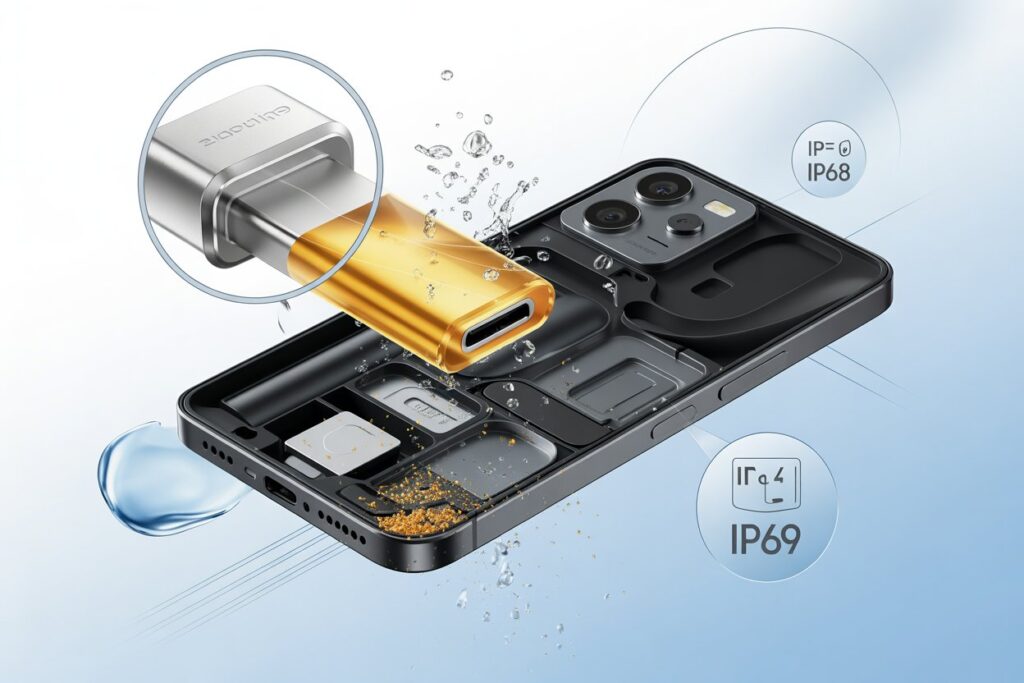
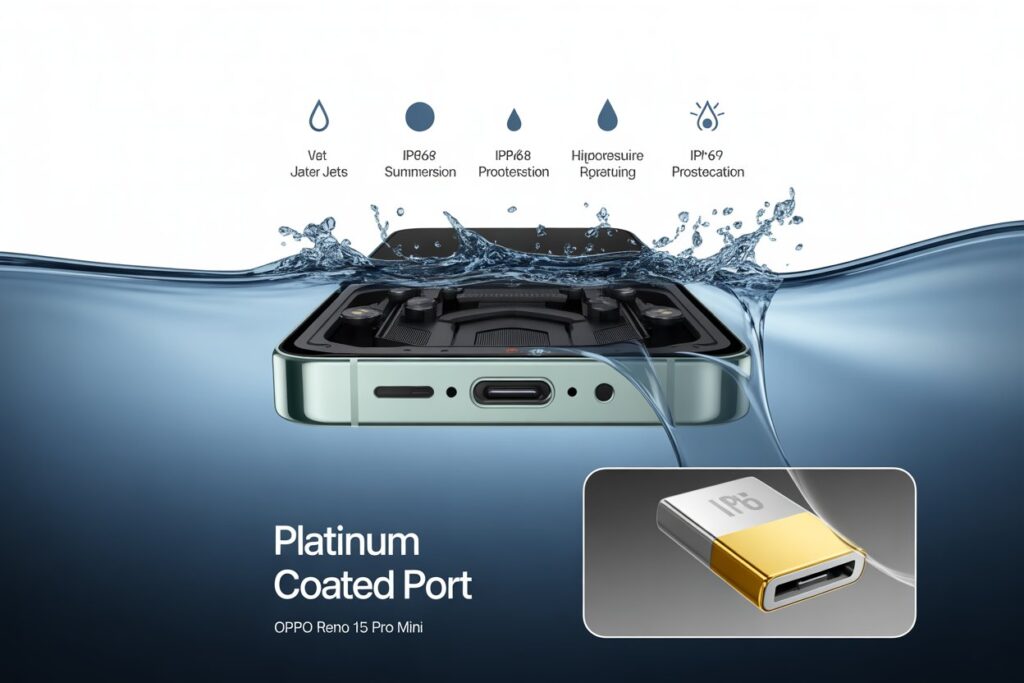
Water and dust resistance has become an expected feature in premium phones, but the Oppo Reno 15 Pro Mini takes it a step further with a triple threat of IP66, IP68, and IP69 ratings. Let’s break down what that actually means rather than just rattling off numbers.
Read more: Anker Chargers Power 2025 PUBG MOBILE Global Championship: Official Partnership and Prize Pool
IP66 protects against powerful jets of water, IP68 allows for submersion in water beyond one meter, and IP69 guards against high pressure, high temperature water jets. For most users, IP68 is plenty. You drop your phone in a sink or get caught in rain, you’re fine. The IP69 rating is more relevant for specific use cases like construction sites or industrial environments where you might genuinely encounter high pressure water cleaning.
The Platinum Coated USB Port Detail

An interesting detail in the leaks is mention of a platinum coated USB Type C port. This isn’t something most manufacturers highlight, but it’s actually quite practical. Regular USB ports can corrode over time, especially in humid environments or if you’re frequently near water. Platinum coating improves corrosion resistance, potentially extending the port’s usable life. It’s the kind of detail that might not matter much in the first year of ownership but could make a difference three or four years down the line.
Camera Setup Borrows From Flagship Playbook

The Oppo Reno 15 Pro Mini is rumored to feature a 200MP Samsung HP5 primary sensor. That’s the same sensor you’d find in much more expensive phones, which immediately makes this camera setup interesting. The 200MP resolution isn’t about actually shooting 200 megapixel photos regularly. Instead, it uses pixel binning to combine multiple smaller pixels into larger effective pixels, improving low light performance and dynamic range while outputting 50MP or even 12.5MP images that look better than native shots at those resolutions would.
The camera system is rounded out with a 50MP ultrawide lens and a 50MP telephoto camera with 3.5x optical zoom. That’s a triple camera setup where all three lenses actually serve distinct purposes rather than being there to pad the spec sheet. The front camera is also expected to be 50MP, which should handle selfies and video calls capably.
Real World Photography Expectations
Numbers on a spec sheet are one thing, but real world camera performance depends on so much more than megapixel counts. Oppo’s image processing algorithms, how well the hardware and software work together, the quality of the lenses themselves, and even seemingly minor things like shutter lag and autofocus speed all contribute to whether a camera system feels good to use.
The 200MP sensor should theoretically give the Oppo Reno 15 Pro Mini excellent detail capture in good lighting and solid low light performance thanks to pixel binning. The 3.5x telephoto is in that sweet spot where it’s noticeably different from the main camera’s field of view but not so zoomed in that you only use it occasionally. It’s particularly useful for portrait photography, where that level of compression can be flattering.
Performance Hardware Takes the MediaTek Route

Under the hood, the Oppo Reno 15 Pro Mini is expected to run on MediaTek’s Dimensity 8450 processor. This is an interesting choice because it positions the phone below flagship territory but well above mid range. The Dimensity 8450 is built on a modern manufacturing process and should deliver solid performance for daily tasks, multitasking, and even gaming, though it won’t match the absolute peak performance of chips like the Snapdragon 8 Elite or Dimensity 9300 Plus.
For most users, the performance difference between an upper mid range chip and a true flagship processor won’t be noticeable in daily use. Apps launch quickly, scrolling is smooth, and even demanding games run well, just maybe not at the absolute highest graphics settings. Where you might notice the difference is in sustained performance during long gaming sessions or when doing processor intensive tasks like video editing.
RAM and Storage Configurations

The base configuration pairs 12GB of RAM with 256GB of storage. That’s a comfortable amount for most users. Twelve gigs of RAM means plenty of headroom for multitasking and keeping apps loaded in memory, while 256GB of storage accommodates a good library of apps, photos, and videos without constant worry about running out of space. A higher tier option with 12GB RAM and 512GB storage is also expected, likely priced around Rs. 5,000 more than the base model.
The storage uses UFS 3.1 or possibly UFS 4.0 standard, which means fast read and write speeds. This translates to quicker app installs, faster photo saving, and generally snappier file operations compared to older storage technologies.
Battery Capacity Impresses for the Size
A 6,200mAh battery in a compact phone is genuinely noteworthy. Most phones this size settle for batteries in the 4,500mAh to 5,000mAh range because fitting a larger cell into a smaller chassis while keeping the phone thin is an engineering challenge. If Oppo has managed to pack 6,200mAh into the Oppo Reno 15 Pro Mini without making it thick or heavy, that’s a real accomplishment.
What does 6,200mAh mean in practical terms? With moderate use, you’re probably looking at comfortable full day battery life with plenty left over. Heavy users who stream video, play games, and constantly use their phones might still drain it in a day, but most people should see at least 6 to 8 hours of screen on time, possibly more depending on usage patterns and settings.
Fast Charging to Match the Large Battery
The phone supports 80W wired fast charging, which should take that large battery from empty to full in roughly 45 to 50 minutes. That’s fast enough that you can get a meaningful charge during a lunch break or while getting ready in the morning. There’s no mention of wireless charging in the leaks, which isn’t unusual for this price segment but would have been a nice addition given the premium positioning.
Battery optimization features and smart charging algorithms should help preserve battery health over the long term. These systems learn your charging patterns and adjust how the phone charges to minimize stress on the battery, theoretically extending its usable lifespan.
How It Stacks Up Against Direct Competitors
At Rs. 59,999, the Oppo Reno 15 Pro Mini enters a crowded space. The OnePlus 13s has already carved out a position as a compact flagship alternative with the Snapdragon 8 Elite processor and clean OxygenOS software. The Vivo X200 FE competes on camera quality and display performance. Samsung’s Galaxy S25 FE brings long software support and tight ecosystem integration. Even Apple’s iPhone 16e sits in roughly this price bracket after considering typical street pricing and exchange offers.
Each of these competitors has established strengths. OnePlus offers arguably better performance hardware. Vivo might have an edge in camera tuning. Samsung provides longer software updates. Apple delivers iOS and the broader Apple ecosystem. For the Oppo Reno 15 Pro Mini to succeed, it needs to find buyers who specifically value what it offers: a compact form factor, good battery life, solid camera hardware, and comprehensive water resistance, all in one package.
The Compact Phone Angle as Differentiation
The 6.32 inch screen size might be the phone’s strongest differentiator. There’s a genuine segment of buyers who are tired of carrying around what essentially amounts to small tablets in their pockets. These people want something that feels manageable, fits comfortably in a hand, and doesn’t require two hands for basic operations. If the Oppo Reno 15 Pro Mini can deliver flagship adjacent performance in that smaller package, it fills a gap that most competitors aren’t addressing.
The challenge is that “compact” is relative. At 6.32 inches, this is still larger than truly small phones like the iPhone SE or some of the compact Android phones from a few years ago. It’s compact compared to today’s average of 6.6 to 6.8 inches, but whether that’s enough of a difference to sway buyers remains to be seen.
Software Experience and Update Commitments
The Oppo Reno 15 Pro Mini will run ColorOS, which is Oppo’s custom Android skin. ColorOS has come a long way from its earlier versions and is now relatively polished, though it still includes more pre installed apps and features than stock Android. How you feel about that depends on personal preference. Some people appreciate the additional features and customization options. Others prefer a cleaner, more minimalist approach.
What matters as much as the initial software experience is the update commitment. Premium phones at this price point should receive at least three years of major Android updates and four to five years of security patches. Oppo’s track record here has been decent but not class leading. Whether they extend support for the Reno 15 series compared to previous generations could influence the long term value proposition.
Expected Android Version at Launch
The phone should launch with Android 16 out of the box, assuming Android 16 releases before or around the same time as the phone. Running the latest Android version means access to all the newest features and security improvements from day one, which is always preferable to launching with an older version and promising an update later.
Making Sense of the Value Proposition
Whether the Oppo Reno 15 Pro Mini represents good value depends on what you prioritize. If compact size, big battery, and comprehensive water resistance are high on your list, this phone offers a combination you won’t find easily elsewhere. The 200MP camera should deliver solid photography results, and the MediaTek Dimensity 8450 provides enough performance for most users.
On the flip side, you’re paying more than you would have for last year’s Reno 14 Pro, and that money doesn’t buy you the absolute fastest processor or the longest software support commitment in this price range. You’re also betting on Oppo’s execution. Leaked specs are one thing, but whether the phone feels refined and polished in daily use won’t be clear until reviewers and early buyers get their hands on it.
The launch offers will be crucial. If Oppo sweetens the deal with aggressive bank discounts, attractive exchange values, and bundled accessories, the effective price could drop enough to make the value proposition more appealing. At the full Rs. 59,999 asking price with minimal offers, it faces stiffer competition.
What Happens After Launch
The Oppo Reno 15 Pro Mini debuts in just over a week, and that’s when the picture will become much clearer. Real world reviews will reveal how the camera performs, whether battery life lives up to the large capacity, how the phone feels in hand, and whether the software experience is smooth or frustrating. Early adopters will discover any issues that don’t show up in controlled testing. Street pricing will stabilize, and we’ll see what actual deals are available beyond the launch period hype.
For buyers considering this phone, patience might be worthwhile unless you absolutely need a new phone on day one. Waiting a few weeks after launch lets you see comprehensive reviews, understand real world performance, and potentially take advantage of better deals as the launch period promotions get replaced by ongoing offers. The phone isn’t going anywhere, and making an informed decision beats rushing into a purchase you might regret. The compact phone market has been underserved for a while, and Oppo’s entry with the Reno 15 Pro Mini addresses a genuine gap. Whether they’ve priced it right and equipped it well enough to succeed against established competitors is the question that will be answered as January unfolds and buyers vote with their wallets.